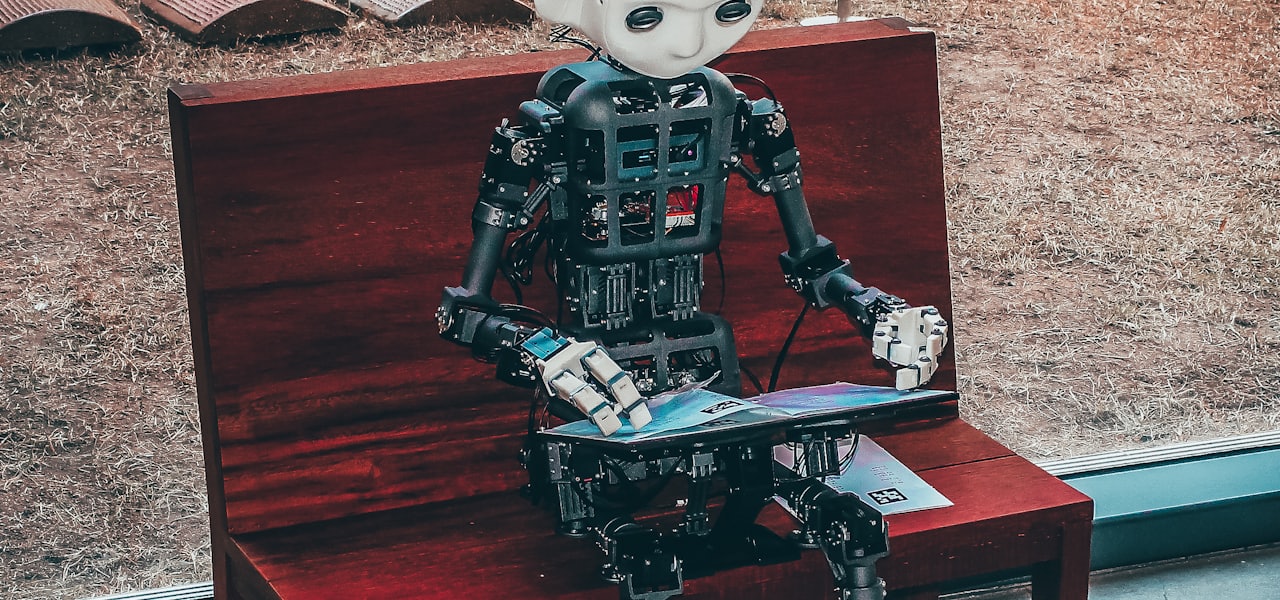
Gary Bryce Fogel (born 1968) is an American biologist and computer scientist. He is the Chief Executive Officer of Natural Selection, Inc. He is most known for his applications of computational intelligence and machine learning to bioinformatics, computational biology, and industrial optimization. == Education and Research == Fogel was born and raised in La Jolla, California, graduating from La Jolla High School. He received a B.A. in biology with a minor in earth sciences from the University of California, Santa Cruz in 1991 and a Ph.D. in biology from the University of California, Los Angeles in 1998. Fogel has published over 150 peer-reviewed publications in conferences and journals, 2 edited books, and 11 patents. As CEO of Natural Selection, Inc., his research focuses on the application of computational intelligence, machine learning, and predictive analytics in areas not limited to: Viral evolution, cellular differentiation, drug discovery, RNA structure, cis-regulatory elements, cancer, and evolutionary game theory as well as the development of evolutionary algorithms and other approaches. == Service == Between 2008–2018 Gary Fogel was editor-in-chief of the Elsevier journal BioSystems. He has served previously as an associate editor for IEEE Transactions on Artificial Intelligence, IEEE Computational Intelligence Magazine (2005–2010), IEEE Transactions on Evolutionary Computation (2001–2013), IEEE Transactions on Emerging Topics in Computational Intelligence (2016–2018), IEEE/ACM Transactions on Computational Biology and Bioinformatics (2004–2008), International Journal of Bioinformatics Research and Applications (2004–2007), International Journal of Data Mining and Bioinformatics (2005–2007), as a consulting editor for the Journal of Computational Intelligence in Bioinformatics (2006–2007), and as an editorial board member of Ecological Informatics (2005–2009) and BMC Big Data Analytics (2015–2020). Within the IEEE Computational Intelligence Society, Fogel founded the Bioinformatics and Bioengineering Technical Committee and established the IEEE Computational Intelligence in Bioinformatics and Computational Biology conference series, chairing the first two meetings in 2004 and 2005 in San Diego. He co-founded the IEEE Conference on Artificial Intelligence in 2023. Fogel served on the IEEE Computational Intelligence Society Administrative Committee (2004–2009, 2014–2022) and served as IEEE CIS Vice President of Conferences (2010–2013, 2019). == Teaching == Gary Fogel also serves as adjunct faculty at San Diego State University in the department of aerospace engineering as well as in the Computational Science Research Center. He has authored four books and numerous articles on the history of early aviation focusing on motorless flight. He is an associate fellow of the American Institute of Aeronautics and Astronautics and serves on the AIAA History Committee. == Awards == 2023 – Outstanding Contribution to Aerospace Education Award, AIAA San Diego Section 2022 – Elected Fellow of the Asia-Pacific Artificial Intelligence Association 2019 – Top 100 AI Leaders in Drug Discovery and Advanced Healthcare by Deep Knowledge Analytics 2019 – Outstanding Contribution to Aerospace Education Award, AIAA San Diego Section 2016 – Meritorious Service Award, IEEE Computational Intelligence Society 2016 – Outstanding Contribution to the Community Award, AIAA San Diego Section 2015 – Outstanding Enhancement of the Image of the Aerospace Profession Award, AIAA San Diego Section 2012 – Medal for Significant Achievement, San Diego Chapter of Sigma Xi 2012 – Fellow of the Institute of Electrical and Electronics Engineers for contributions to computational intelligence and its application to biology, chemistry, and medicine. == Aeromodeling == Gary Fogel has established national and world records for model aircraft. He helped establish the National Model Aviation Heritage program for the Academy of Model Aeronautics. He is a leader member, contest director, and fellow of the Academy of Model Aeronautics, and was inducted into the Academy of Model Aeronautics Hall of Fame in 2025.
Rademacher complexity
In computational learning theory (machine learning and theory of computation), Rademacher complexity, named after Hans Rademacher, measures richness of a class of sets with respect to a probability distribution. The concept can also be extended to real valued functions. == Definitions == === Rademacher complexity of a set === Given a set A ⊆ R m {\displaystyle A\subseteq \mathbb {R} ^{m}} , the Rademacher complexity of A is defined as follows: Rad ( A ) := 1 m E σ [ sup a ∈ A ∑ i = 1 m σ i a i ] {\displaystyle \operatorname {Rad} (A):={\frac {1}{m}}\mathbb {E} _{\sigma }\left[\sup _{a\in A}\sum _{i=1}^{m}\sigma _{i}a_{i}\right]} where σ 1 , σ 2 , … , σ m {\displaystyle \sigma _{1},\sigma _{2},\dots ,\sigma _{m}} are independent random variables drawn from the Rademacher distribution i.e. Pr ( σ i = + 1 ) = Pr ( σ i = − 1 ) = 1 / 2 {\displaystyle \Pr(\sigma _{i}=+1)=\Pr(\sigma _{i}=-1)=1/2} for i ∈ { 1 , 2 , … , m } {\displaystyle i\in \{1,2,\dots ,m\}} , and a = ( a 1 , … , a m ) ∈ A {\displaystyle a=(a_{1},\ldots ,a_{m})\in A} . Some authors take the absolute value of the sum before taking the supremum, but if A {\displaystyle A} is symmetric this makes no difference. === Rademacher complexity of a function class === Let S = { z 1 , z 2 , … , z m } ⊆ Z {\displaystyle S=\{z_{1},z_{2},\dots ,z_{m}\}\subseteq Z} be a sample of points and consider a function class F {\displaystyle {\mathcal {F}}} of real-valued functions over Z {\displaystyle Z} . Then, the empirical Rademacher complexity of F {\displaystyle {\mathcal {F}}} given S {\displaystyle S} is defined as: Rad S ( F ) = 1 m E σ [ sup f ∈ F | ∑ i = 1 m σ i f ( z i ) | ] {\displaystyle \operatorname {Rad} _{S}({\mathcal {F}})={\frac {1}{m}}\mathbb {E} _{\sigma }\left[\sup _{f\in {\mathcal {F}}}\left|\sum _{i=1}^{m}\sigma _{i}f(z_{i})\right|\right]} This can also be written using the previous definition: Rad S ( F ) = Rad ( F ∘ S ) {\displaystyle \operatorname {Rad} _{S}({\mathcal {F}})=\operatorname {Rad} ({\mathcal {F}}\circ S)} where F ∘ S {\displaystyle {\mathcal {F}}\circ S} denotes function composition, i.e.: F ∘ S := { ( f ( z 1 ) , … , f ( z m ) ) ∣ f ∈ F } {\displaystyle {\mathcal {F}}\circ S:=\{(f(z_{1}),\ldots ,f(z_{m}))\mid f\in {\mathcal {F}}\}} The worst case empirical Rademacher complexity is Rad ¯ m ( F ) = sup S = { z 1 , … , z m } Rad S ( F ) {\displaystyle {\overline {\operatorname {Rad} }}_{m}({\mathcal {F}})=\sup _{S=\{z_{1},\dots ,z_{m}\}}\operatorname {Rad} _{S}({\mathcal {F}})} Let P {\displaystyle P} be a probability distribution over Z {\displaystyle Z} . The Rademacher complexity of the function class F {\displaystyle {\mathcal {F}}} with respect to P {\displaystyle P} for sample size m {\displaystyle m} is: Rad P , m ( F ) := E S ∼ P m [ Rad S ( F ) ] {\displaystyle \operatorname {Rad} _{P,m}({\mathcal {F}}):=\mathbb {E} _{S\sim P^{m}}\left[\operatorname {Rad} _{S}({\mathcal {F}})\right]} where the above expectation is taken over an identically independently distributed (i.i.d.) sample S = ( z 1 , z 2 , … , z m ) {\displaystyle S=(z_{1},z_{2},\dots ,z_{m})} generated according to P {\displaystyle P} . == Intuition == The Rademacher complexity is typically applied on a function class of models that are used for classification, with the goal of measuring their ability to classify points drawn from a probability space under arbitrary labellings. When the function class is rich enough, it contains functions that can appropriately adapt for each arrangement of labels, simulated by the random draw of σ i {\displaystyle \sigma _{i}} under the expectation, so that this quantity in the sum is maximized. The Rademacher complexity of a set A {\displaystyle A} can be rewritten as Rad ( A ) := 1 m E σ [ sup a ∈ A ∑ i = 1 m σ i a i ] = 1 m 2 m ∑ σ ∈ { − 1 / m , + 1 / m } m [ sup a ∈ A ⟨ σ , a ⟩ ] . {\displaystyle \operatorname {Rad} (A):={\frac {1}{m}}\mathbb {E} _{\sigma }\left[\sup _{a\in A}\sum _{i=1}^{m}\sigma _{i}a_{i}\right]={\frac {1}{{\sqrt {m}}2^{m}}}\sum _{\sigma \in \{-1/{\sqrt {m}},+1/{\sqrt {m}}\}^{m}}\left[\sup _{a\in A}\langle \sigma ,a\rangle \right].} Each term in the summation is the farthest distance of the set A {\displaystyle A} from the origin, along a unit-length direction σ {\displaystyle \sigma } . The directions are along the vertices of a hypercube. Thus, we can also write it as Rad ( A ) = 1 2 m 1 2 m − 1 ∑ σ ∈ { − 1 / m , + 1 / m } m / { − 1 , + 1 } [ sup a ∈ A ⟨ σ , a ⟩ − inf a ∈ A ⟨ σ , a ⟩ ] {\displaystyle \operatorname {Rad} (A)={\frac {1}{2{\sqrt {m}}}}{\frac {1}{2^{m-1}}}\sum _{\sigma \in \{-1/{\sqrt {m}},+1/{\sqrt {m}}\}^{m}/\{-1,+1\}}\left[\sup _{a\in A}\langle \sigma ,a\rangle -\inf _{a\in A}\langle \sigma ,a\rangle \right]} Here, the set { − 1 / m , + 1 / m } m / { − 1 , + 1 } {\displaystyle \{-1/{\sqrt {m}},+1/{\sqrt {m}}\}^{m}/\{-1,+1\}} denotes half of the vertices of a hypercube, selected so that each diagonal has exactly one vertex selected. In words, this states that 2 m Rad ( A ) {\displaystyle 2{\sqrt {m}}\operatorname {Rad} (A)} is precisely the average width of the set A {\displaystyle A} along all diagonal directions of a hypercube. == Examples == A singleton set has 0 width in any direction, so it has Rademacher complexity 0. The set A = { ( 1 , 1 ) , ( 1 , 2 ) } ⊆ R 2 {\displaystyle A=\{(1,1),(1,2)\}\subseteq \mathbb {R} ^{2}} has average width 1 / 2 {\displaystyle 1/{\sqrt {2}}} along the two diagonal directions of the square, so it has Rademacher complexity 1 / 4 {\displaystyle 1/4} . The unit cube [ 0 , 1 ] m {\displaystyle [0,1]^{m}} has constant width m {\displaystyle {\sqrt {m}}} along the diagonal directions, so it has Rademacher complexity 1 / 2 {\displaystyle 1/2} . Similarly, the unit cross-polytope { x ∈ R m : ‖ x ‖ 1 ≤ 1 } {\displaystyle \{x\in \mathbb {R} ^{m}:\|x\|_{1}\leq 1\}} has constant width 2 / m {\displaystyle 2/{\sqrt {m}}} along the diagonal directions, so it has Rademacher complexity 1 / m {\displaystyle 1/m} . == Using the Rademacher complexity == The Rademacher complexity can be used to derive data-dependent upper-bounds on the learnability of function classes. Intuitively, a function-class with smaller Rademacher complexity is easier to learn. === Bounding the representativeness === In machine learning, it is desired to have a training set that represents the true distribution of some sample data S {\displaystyle S} . This can be quantified using the notion of representativeness. Denote by P {\displaystyle P} the probability distribution from which the samples are drawn. Denote by H {\displaystyle H} the set of hypotheses (potential classifiers) and denote by F {\displaystyle {\mathcal {F}}} the corresponding set of error functions, i.e., for every hypothesis h ∈ H {\displaystyle h\in H} , there is a function f h ∈ F {\displaystyle f_{h}\in F} , that maps each training sample (features,label) to the error of the classifier h {\displaystyle h} (note in this case hypothesis and classifier are used interchangeably). For example, in the case that h {\displaystyle h} represents a binary classifier, the error function is a 0–1 loss function, i.e. the error function f h {\displaystyle f_{h}} returns 0 if h {\displaystyle h} correctly classifies a sample and 1 else. We omit the index and write f {\displaystyle f} instead of f h {\displaystyle f_{h}} when the underlying hypothesis is irrelevant. Define: L P ( f ) := E z ∼ P [ f ( z ) ] {\displaystyle L_{P}(f):=\mathbb {E} _{z\sim P}[f(z)]} – the expected error of some error function f ∈ F {\displaystyle f\in {\mathcal {F}}} on the real distribution P {\displaystyle P} ; L S ( f ) := 1 m ∑ i = 1 m f ( z i ) {\displaystyle L_{S}(f):={1 \over m}\sum _{i=1}^{m}f(z_{i})} – the estimated error of some error function f ∈ F {\displaystyle f\in {\mathcal {F}}} on the sample S {\displaystyle S} . The representativeness of the sample S {\displaystyle S} , with respect to P {\displaystyle P} and F {\displaystyle {\mathcal {F}}} , is defined as: Rep P ( F , S ) := sup f ∈ F ( L P ( f ) − L S ( f ) ) {\displaystyle \operatorname {Rep} _{P}({\mathcal {F}},S):=\sup _{f\in F}(L_{P}(f)-L_{S}(f))} Smaller representativeness is better, since it provides a way to avoid overfitting: it means that the true error of a classifier is not much higher than its estimated error, and so selecting a classifier that has low estimated error will ensure that the true error is also low. Note however that the concept of representativeness is relative and hence can not be compared across distinct samples. The expected representativeness of a sample can be bounded above by the Rademacher complexity of the function class: If F {\displaystyle {\mathcal {F}}} is a set of functions with range within [ 0 , 1 ] {\displaystyle [0,1]} , then Rad P , m ( F ) − ln 2 2 m ≤ E S ∼ P m [ Rep P ( F , S ) ] ≤ 2 Rad P , m ( F ) {\displaystyle \operatorname {Rad} _{P,m}({\mathcal {F}})-{\sqrt {\frac {\ln 2}{2m}}}\leq \mathbb {E} _{S\sim P^{m}}[\operatorname {Rep} _{P}({\
Kunihiko Fukushima
Kunihiko Fukushima (Japanese: 福島 邦彦, born 16 March 1936) is a Japanese computer scientist, most noted for his work on artificial neural networks and deep learning. He is currently working part-time as a senior research scientist at the Fuzzy Logic Systems Institute in Fukuoka, Japan. == Notable scientific achievements == In 1980, Fukushima published the neocognitron, the original deep convolutional neural network (CNN) architecture. Fukushima proposed several supervised and unsupervised learning algorithms to train the parameters of a deep neocognitron such that it could learn internal representations of incoming data. Today, however, the CNN architecture is usually trained through backpropagation. This approach is now heavily used in computer vision. In 1969 Fukushima introduced the ReLU (Rectifier Linear Unit) activation function in the context of visual feature extraction in hierarchical neural networks, which he called "analog threshold element". (Though the ReLU was first used by Alston Householder in 1941 as a mathematical abstraction of biological neural networks.) As of 2017 it is the most popular activation function for deep neural networks. == Education and career == In 1958, Fukushima received his Bachelor of Engineering in electronics from Kyoto University. He became a senior research scientist at the NHK Science & Technology Research Laboratories. In 1989, he joined the faculty of Osaka University. In 1999, he joined the faculty of the University of Electro-Communications. In 2001, he joined the faculty of Tokyo University of Technology. From 2006 to 2010, he was a visiting professor at Kansai University. Fukushima acted as founding president of the Japanese Neural Network Society (JNNS). He also was a founding member on the board of governors of the International Neural Network Society (INNS), and president of the Asia-Pacific Neural Network Assembly (APNNA). He was one of the board of governors of the International Neural Network Society (INNS) in 1989-1990 and 1993-2005. == Awards == In 2020, Fukushima received the Bower Award and Prize for Achievement in Science. In 2022, Fukushima became a laureate of the Asian Scientist 100 by the Asian Scientist. He also received the IEICE Achievement Award and Excellent Paper Awards, the IEEE Neural Networks Pioneer Award, the APNNA Outstanding Achievement Award, the JNNS Excellent Paper Award and the INNS Helmholtz Award.
The Best Free AI Pair Programmer for Beginners
Comparing the best AI pair programmer? An AI pair programmer is software that uses machine learning to help you get more done — it lowers the barrier so anyone can produce professional output. Privacy matters too: check whether your data trains the model and whether a no-log or enterprise tier is available. Whether you are a beginner or a pro, the right AI pair programmer slots into your workflow and pays for itself fast. Below we compare features, pricing, and real output so you can choose with confidence.
AI Voice Assistants Reviews: What Actually Works in 2026
In search of the best AI voice assistant? An AI voice assistant is software that uses machine learning to help you get more done — it turns a rough idea into a polished result in seconds. When choosing one, weigh output quality, pricing, export formats, and how well it fits the tools you already use. Whether you are a beginner or a pro, the right AI voice assistant slots into your workflow and pays for itself fast. Below we compare features, pricing, and real output so you can choose with confidence.
Immuni
Immuni was an open-source COVID-19 contact tracing app used for digital contact tracing in Italy, dismissed on 31 December 2022, after a long and debated criticism for having been a failure due to the lack of trust placed by citizens. Immuni COVID-19 contact-tracing app had in fact been downloaded only by 12% of Italians between 14 and 75 years old (the government had previously stated that, in order for the app to work properly, it should have been downloaded by at least 60% of Italians). It makes use of the Apple/Google Exposure Notification system. == Development == It was developed by Bending Spoons and released by the Italian Ministry of Health on 1 June 2020. After a testing phase in 4 Italian regions (Abruzzo, Apulia, Liguria, Marche), the app started being active in the whole country on 15 June 2020. The app was initially released on App Store and Google Play, and since 1 February 2021 it is available on the Huawei AppGallery as well. === Source code === The source code was published on GitHub on the 25 May. The app only works in Italy, but compatibility with other European contact tracing apps was a goal. Since 19 October 2020 the app supports key-exchanges with the EU Interoperability Gateway and is therefore able to communicate with contact tracing apps of other EU countries. == Shutdown == As of 16 December 2020, the app was downloaded more than 10 million times, a number which increased to 21.882.502 downloads the day before the app's shutdown. On 27 December 2022 the Italian Ministry of Health announced that the app and its infrastructures will be dismissed on the 31 December of the same year.
The Best Free Conversational AI Platform for Beginners
Curious about the best conversational AI platform? An conversational AI platform is software that uses machine learning to help you get more done — it combines speed, accuracy, and an interface that just works. Hands-on testing shows real-world results vary, so a short free trial is the smartest way to decide. Whether you are a beginner or a pro, the right conversational AI platform slots into your workflow and pays for itself fast. Read on for hands-on impressions, pricing tiers, and the standout features that matter.